By Imran Musa
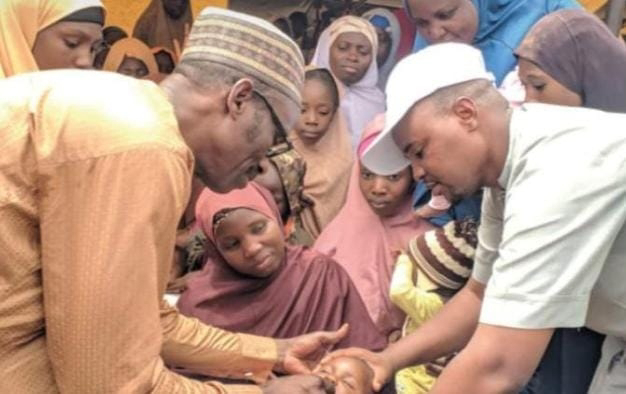
Nigeria’s Safety and Antimicrobial Resistance of Mass Administration of Azithromycin in Children (SARMAAN) project says it has reached more than 16 million children across 11 states in Northern Nigeria with life-saving health interventions.
The initiative is aimed at improving child survival through evidence-based public health interventions, supported by collaboration among government agencies, healthcare workers, researchers and local communities.
The achievement comes as global health experts, policymakers and researchers prepare for the 18th World Congress on Public Health in Cape Town, South Africa, where Nigeria’s experience is expected to highlight the importance of sustainable child-health programmes.
Available data indicate that Nigeria’s under-five mortality rate declined from 132 deaths per 1,000 live births in the 2018 Nigeria Demographic and Health Survey to 102 deaths per 1,000 live births in the 2023–2024 survey.
Despite the improvement, the figure remains above the Sustainable Development Goal target of 25 deaths per 1,000 live births.
The Lead Investigator of the SARMAAN project and Director of Research at the Nigerian Institute of Medical Research, Professor Oliver Ezechi, said the initiative had demonstrated the possibility of integrating safety monitoring and antimicrobial resistance surveillance into large-scale drug administration programmes.
He explained that monitoring mechanisms were incorporated into the intervention from the beginning to ensure the safety of participating children and track possible antimicrobial resistance.
Also speaking, SARMAAN Champion and paediatrician, Dr Zainab Shinkafi-Bagudu, attributed the project’s progress to the collective efforts of healthcare workers, caregivers, communities and government institutions.
She emphasised the need for equitable healthcare delivery, noting that every child should have access to essential health interventions, regardless of geographical location.
In Jigawa State, the First Lady and SARMAAN Champion, Hadiza Umar Namadi, identified community trust as a major factor in the success of public health programmes.
She said the cooperation of mothers, caregivers and local communities had been instrumental in ensuring the effective implementation of the initiative.
Similarly, another SARMAAN Champion and paediatrician, Professor Robinson Daniel Wammanda, said reaching millions of children required a well-coordinated delivery system and the use of multiple platforms to ensure wider coverage.
The project has also engaged government stakeholders on incorporating its achievements and lessons into broader child-health policies, with emphasis on strengthening existing health systems, institutional ownership and sustainable funding.
Organisers say the partnerships, evidence and delivery structures established through SARMAAN could serve as a foundation for expanding child-survival interventions in Nigeria and other countries facing similar public health challenges.
SARMAAN is part of the regional Resiliency through Azithromycin in Children (REACH) Network, which promotes a government-led, multi-partner approach to the mass administration of azithromycin, while prioritising sustainability, scalability and stronger health systems.